
Pick the team
Send the queue to the people or group responsible for that type of call.
Let callers wait in order when your team is busy, with a message and fallback you configure.
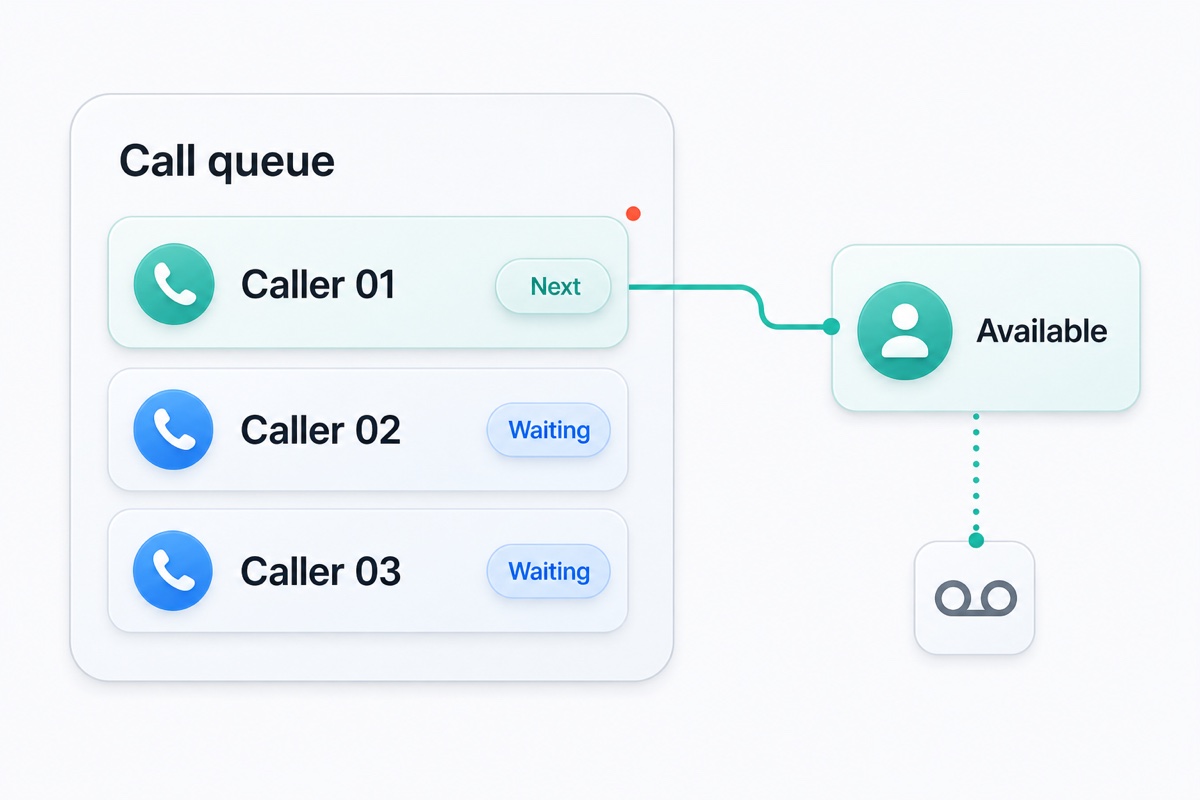
A call queue holds several incoming callers in order until a configured teammate becomes available. Callers can hear a waiting message instead of going straight to voicemail, and each call remains in line until someone answers or the fallback applies. A support desk can use a queue during peak periods, giving a busy team a structured way to handle more than one waiting caller.
Use a queue when several callers may need to wait. Use a ring group when the main goal is to let several teammates share one incoming call.
Decide who answers, what callers hear while they wait, and when the call should continue to another path.
Send the queue to the people or group responsible for that type of call.
Tell callers they are in the right place and that the team will answer when available.
When the waiting limit is reached, continue to voicemail, a message, or another destination.
Set up a call queue for your team.
Get startedThe queue keeps callers in sequence while the responsible team is occupied.
A clear message lets callers know what is happening while they wait.
When the configured waiting path ends, the caller can continue to voicemail or another destination.
Callers can wait in order while the responsible team works through opening-time demand.
The queue keeps incoming calls organized while the available people finish one conversation at a time.
The waiting path keeps callers in sequence until a teammate is ready.
How service teams keep busy call periods orderly.
Peak-hour calls wait in a clear path for the people configured to answer support.
Learn more →Morning booking calls can wait briefly for the responsible front-desk destination.
Learn more →Weather and seasonal spikes can enter a queue instead of depending on one available phone.
Learn more →Practical answers about setup, call handling, and how this feature fits into VoxiPlus.
They hear the waiting message configured for that queue before the call connects or continues to its fallback.
You set the waiting limit. When it is reached, the call follows the fallback you selected.
The queue keeps callers in order and connects the next caller to the first available teammate in that route.
No. A ring group gives several people the chance to answer one incoming call. A queue holds several callers until someone is available.
Yes. A queue can help a small team when calls occasionally arrive faster than the available people can answer them.
Business-hours routing can bypass the daytime queue and send callers to the closed message, voicemail, or another configured path.
Choose the team, waiting message, and fallback for callers who arrive while the responsible destinations are busy.